

How to Choose the Perfect Carton Box for Your E-commerce Business

In the world of e-commerce, your product's journey doesn't end when a customer clicks "buy." It ends when they open the package and hold your product in their hands. Between those two moments, your carton box is the only thing protecting your product from damage, delays, and disappointed customers.
A Complete Packaging Guide for Online Sellers in Malaysia
Choosing the right carton box might seem like a small decision, but it has a big impact on your business. The wrong box can lead to damaged products, negative reviews, costly returns, and wasted money on shipping. The right box protects your product, impresses your customer, and keeps your costs under control.
In this guide, we'll walk you through everything you need to know about choosing the perfect carton box for your e-commerce business in Malaysia.
Why Carton Box Selection Matters for E-commerce
Many new e-commerce sellers underestimate the importance of packaging. They focus on product quality, marketing, and pricing, but treat packaging as an afterthought. This is a costly mistake.
Product Protection: Your carton box is your product's first line of defence during shipping. Packages go through sorting facilities, delivery trucks, and multiple handling points before reaching your customer. A good carton box absorbs shocks, prevents crushing, and keeps your product safe throughout this journey.
Customer Experience: The unboxing moment is part of your customer's experience with your brand. A sturdy, well-sized box creates a positive impression. A flimsy, oversized, or damaged box makes your business look unprofessional, even if your product inside is excellent.
Shipping Costs: Courier companies in Malaysia charge based on either actual weight or volumetric weight, whichever is higher. If you use a box that's too big for your product, you're paying for empty space. Choosing the right size box can significantly reduce your shipping costs.
Brand Image: Your packaging is an extension of your brand. Whether you use plain kraft boxes or custom printed packaging, the quality and presentation of your carton box tells customers something about your business.
Environmental Responsibility: More customers today care about sustainability. Using appropriately sized boxes reduces waste and shows that your business is environmentally conscious.
Understanding Carton Box Types
Before choosing a size, you need to understand the different types of carton boxes available. Each type serves a different purpose.
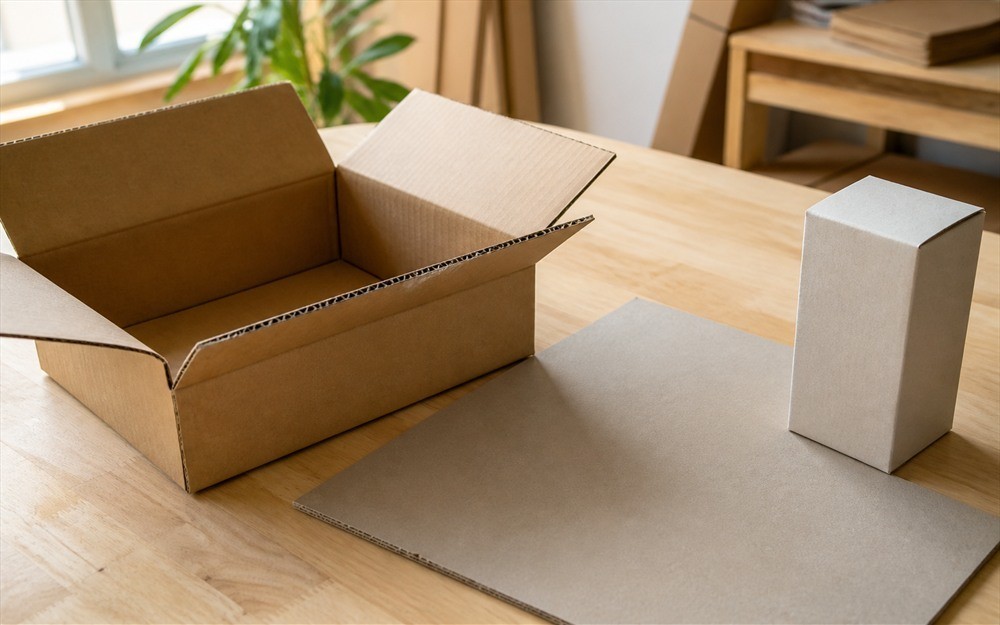
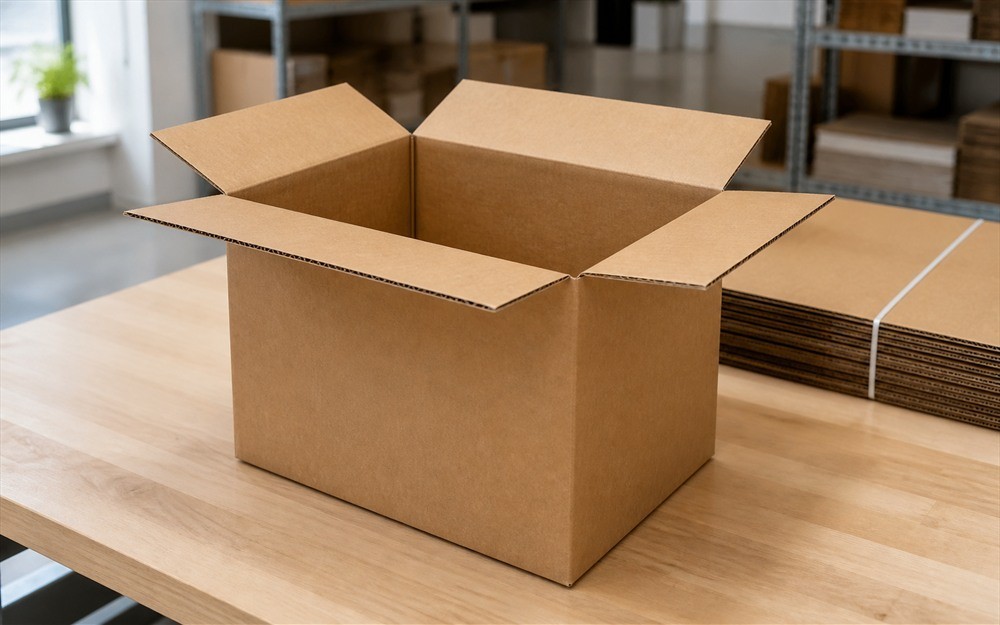
RSC Box (Regular Slotted Container): This is the most common carton box type for e-commerce shipping. It has four flaps on the top and four flaps on the bottom that meet in the middle when closed. RSC boxes are versatile, easy to assemble, and suitable for most products. They're sealed with tape and are the standard choice for shipping clothing, electronics, books, and general merchandise.
Pizza Box / Die-Cut Box: These boxes feature a flip-top lid design, similar to pizza boxes. They're made from die-cut cardboard that folds into shape without needing tape. Pizza boxes are popular for food packaging, gift boxes, and retail presentation. They create a better unboxing experience and are ideal for products where presentation matters.
Document Box: These are larger boxes designed specifically for storing files, folders, and paperwork. They typically come with handles and lids for easy carrying. Document boxes are useful for businesses that need to ship or store large quantities of paper documents.
For most e-commerce sellers, RSC boxes will be your primary packaging choice. Pizza boxes and die-cut boxes are excellent additions if you sell gift items, food products, or want to create a premium unboxing experience.
Flute Types: A Flute vs B Flute
Carton boxes are made from corrugated cardboard, which has a wavy layer (called the "flute") sandwiched between flat outer layers. The type of flute affects the box's thickness, strength, and cushioning ability.
A Flute is approximately 4.5 to 5.0mm thick. It has taller waves that provide excellent cushioning and shock absorption. A Flute boxes are ideal for fragile items like glassware, ceramics, and electronics, as well as heavier products that need extra support.
B Flute is approximately 2.5 to 3.0mm thick. It has shorter, tighter waves that provide excellent stacking strength and a smoother surface for printing. B Flute boxes are more compact, cost-efficient, and suitable for general shipping, retail packaging, and products where printing quality matters.
| Feature | A Flute | B Flute |
|---|---|---|
| Thickness | ~4.5 - 5.0 mm | ~2.5 - 3.0 mm |
| Cushioning | Excellent | Good |
| Stacking Strength | Very Good | Excellent |
| Print Quality | Good | Excellent |
| Best For | Fragile, heavy items | General use, retail, printing |
For most e-commerce products, B Flute offers the best balance of protection, cost, and versatility. Choose A Flute when shipping fragile items or products over 5kg that need extra cushioning.
How to Choose the Right Box Size
Choosing the correct box size is one of the most important decisions you'll make. A box that's too big wastes money on shipping and requires more void fill material. A box that's too small risks damaging your product.
Step 1: Measure Your Product
Start by measuring your product's length, width, and height in centimetres. If your product has irregular shapes, measure the maximum dimensions at the widest points.
Step 2: Add Padding Allowance
You need space inside the box for protective padding like bubble wrap, foam, or paper. As a general rule, add 2 to 3 centimetres to each dimension. For fragile items, add 4 to 5 centimetres to allow for extra cushioning.
Step 3: Find the Closest Box Size
Look for a standard box size that matches your calculated dimensions. It's better to go slightly larger than slightly smaller. However, avoid going too large, as this increases shipping costs and requires more void fill.
Step 4: Consider Product Weight
Make sure the box you choose can support your product's weight. Heavier products need stronger boxes with thicker walls. For products over 5kg, consider A Flute or double-wall construction.
Matching Box Size to Your Products
Different products have different packaging requirements. Here's a guide to help you choose the right box size based on what you're selling.
| Product Type | Recommended Box Size | Flute Type |
|---|---|---|
| Small accessories, jewellery | 15 x 10 x 10 cm | B Flute |
| Cosmetics, skincare | 20 x 15 x 10 cm | B Flute |
| T-shirts, clothing (folded) | 30 x 22 x 10 cm | B Flute |
| Shoes | 35 x 25 x 15 cm | B Flute |
| Books, stationery | 25 x 20 x 10 cm | B Flute |
| Small electronics, gadgets | 25 x 20 x 15 cm | A Flute |
| Glassware, ceramics | 25 x 25 x 25 cm | A Flute |
| Small home appliances | 35 x 30 x 25 cm | A Flute |
| Gift hampers | 30 x 30 x 20 cm | B Flute |
| Multiple items bundle | 40 x 30 x 25 cm | A or B Flute |
These are general guidelines. Always measure your specific products and test with actual boxes before committing to bulk orders.
Shipping Courier Considerations in Malaysia
Different courier companies in Malaysia have different size limits and pricing structures. Understanding these can help you choose boxes that minimize shipping costs.
Volumetric Weight Calculation: Most couriers charge based on volumetric weight (also called dimensional weight) when it exceeds actual weight. The formula is:
Volumetric Weight (kg) = Length (cm) x Width (cm) x Height (cm) ÷ 6000
For example, a box measuring 40cm x 30cm x 25cm has a volumetric weight of 5kg (40 x 30 x 25 ÷ 6000 = 5). If your product weighs only 2kg, you'll be charged for 5kg because the volumetric weight is higher.
This is why choosing the right box size matters so much. An oversized box means you're paying for empty air.
| Courier | Max Size (L+W+H) | Max Weight |
|---|---|---|
| Pos Laju | 150 cm | 30 kg |
| J&T Express | 150 cm | 30 kg |
| Ninja Van | 150 cm | 30 kg |
| DHL eCommerce | 150 cm | 30 kg |
| Shopee Express | 150 cm | 30 kg |
Note: Size limits and pricing may change. Always verify with your courier for the latest information.
Tips to Reduce Shipping Costs:
- Use the smallest box that safely fits your product with padding
- Consider flat or foldable packaging for clothing and soft items
- Use courier bags (polymailers) for non-fragile, lightweight items
- Negotiate rates with couriers if you ship high volumes
Balancing Cost vs Protection
It's tempting to buy the cheapest boxes available to save money. However, this can be a false economy that costs you more in the long run.
The Real Cost of Cheap Boxes: Low-quality boxes are more likely to get damaged during shipping. This leads to damaged products, customer complaints, negative reviews, and costly returns or replacements. The money you saved on cheap boxes quickly disappears when you have to refund orders and resend products.
When to Invest in Better Packaging: Spend more on packaging when you're shipping fragile items, high-value products, or items where presentation matters. For everyday products like clothing or books, standard quality boxes are usually sufficient.
Bulk Buying: One of the best ways to reduce packaging costs is to buy in bulk. Carton box prices drop significantly when you order larger quantities. If you have consistent sales, calculate your monthly box usage and buy accordingly.
No MOQ Options: If you're a small seller or just starting out, look for suppliers that offer low or no minimum order quantities. This lets you test different box sizes without committing to large orders.
Branding Your Carton Box
Your carton box is a branding opportunity. Even if you can't afford custom printed boxes, there are ways to make your packaging memorable.
Plain Kraft Boxes: Plain brown kraft boxes are cost-effective and have a natural, eco-friendly appearance that many customers appreciate. They're a safe choice for businesses just starting out.
Custom Printed Boxes: Custom printing with your logo, brand colours, and designs creates a professional appearance and enhances the unboxing experience. Custom printed boxes are worth considering once your business is established and you have consistent order volumes.
Budget-Friendly Branding Alternatives: If custom printed boxes are too expensive, consider these alternatives:
- Branded stickers: Add logo stickers to seal your boxes
- Custom tape: Use printed packing tape with your brand name
- Rubber stamps: Stamp your logo on plain boxes
- Thank you cards: Include branded cards inside the package
- Tissue paper: Wrap products in coloured or printed tissue paper
In Malaysia, many suppliers now offer custom printing with no minimum order quantity (No MOQ), making it accessible for small businesses to create branded packaging without large upfront investments.
Common Mistakes E-commerce Sellers Make
Avoid these common packaging mistakes that cost e-commerce sellers money and customers:
Using Boxes That Are Too Big: This is the most common mistake. Oversized boxes increase shipping costs, require more void fill, and look unprofessional. Always match your box size to your product size.
Using Boxes That Are Too Small: Squeezing products into undersized boxes leads to damage during shipping. Products need room for protective padding to absorb shocks.
Ignoring Flute Type: Using thin B Flute boxes for heavy or fragile items can result in crushed packages. Match the flute type to your product's protection needs.
Skipping Inner Protection: A carton box alone isn't always enough. Fragile items need bubble wrap, foam, or paper padding inside. Empty space in boxes should be filled to prevent products from moving during transit.
Not Testing Before Bulk Orders: Always order samples and test with actual products before buying boxes in bulk. What looks right on paper might not work in practice.
Forgetting the Unboxing Experience: Your packaging is part of your customer's experience. A messy, difficult-to-open package creates frustration, even if the product inside is perfect.
Quick Checklist: Choosing Your Carton Box
Use this checklist every time you need to select packaging for a new product:
- Measure your product – Record length, width, and height in centimetres
- Add padding allowance – Add 2-3cm for standard items, 4-5cm for fragile items
- Check product weight – Heavy items (over 5kg) need stronger boxes
- Choose flute type – A Flute for fragile/heavy, B Flute for general use
- Select box style – RSC for shipping, pizza box for presentation
- Calculate volumetric weight – Ensure shipping costs are acceptable
- Consider branding needs – Plain, stickers, or custom printing
- Order samples first – Test before buying in bulk
- Check inner protection – Plan for bubble wrap or void fill if needed
- Review and optimize – Regularly assess if your packaging choices still make sense
The Bottom Line
Choosing the right carton box for your e-commerce business isn't complicated, but it does require some thought and planning. The perfect box protects your product, fits your budget, satisfies your customer, and represents your brand well.
Start by understanding what you're shipping. Measure your products, consider their fragility and weight, and choose box sizes that provide adequate protection without excessive empty space. Match your flute type to your product's needs, with A Flute for fragile and heavy items, and B Flute for general merchandise.
Pay attention to shipping costs. In Malaysia, couriers charge by volumetric weight, so oversized boxes cost you money. Use the smallest box that safely fits your product with appropriate padding.
Don't overlook the customer experience. Your packaging is the first physical touchpoint with your customer. A well-packaged product creates a positive impression and encourages repeat purchases and good reviews.
Finally, start small and optimize over time. Order samples before buying in bulk. Test different box sizes with real shipments. Track damage rates and customer feedback. As your business grows, your packaging strategy should evolve too.
The right carton box is an investment in your e-commerce success. Take the time to choose wisely, and your products will arrive safely, your customers will be happy, and your business will thrive.
Ready to Find Your Perfect Carton Box?
At FixGuru Malaysia, we offer a wide range of carton boxes in all sizes, from small accessory boxes to large shipping cartons. Both A Flute and B Flute options available. Ready stock for immediate delivery. Custom printing with No MOQ!