

Corrugated vs Cardboard: What's the Difference and Why It Matters
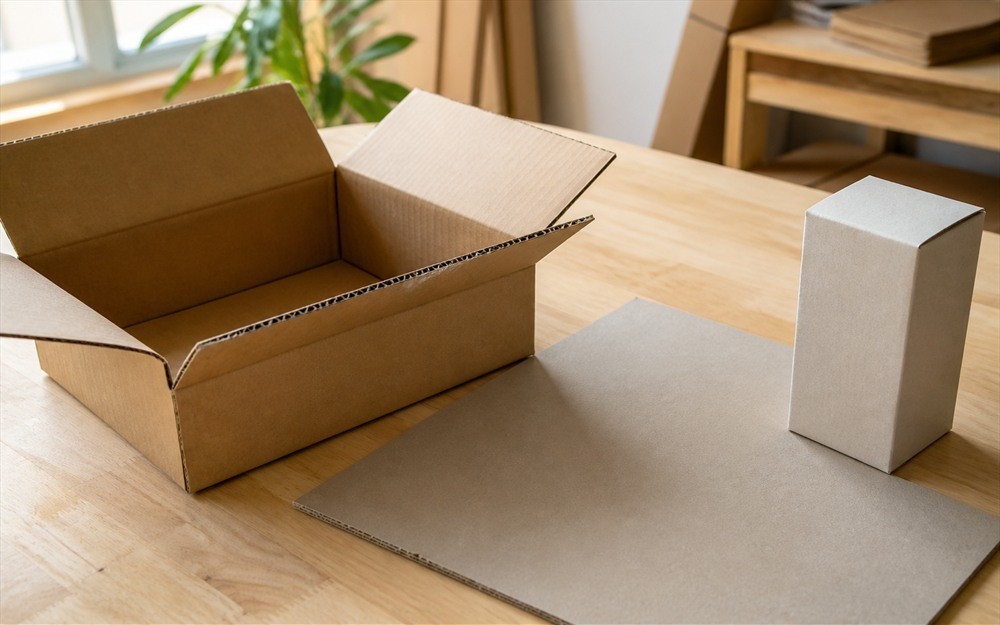
Corrugated board and cardboard are two different materials, even though most people use the names interchangeably. Cardboard is a single flat sheet of thick paper, while corrugated board has flat liners with a wavy fluted layer that makes it strong enough for shipping.
Corrugated board and cardboard are two different materials, even though most people use the names interchangeably. Cardboard is a single flat sheet of thick paper, like a cereal box. Corrugated board is a sandwich of flat liners with a wavy fluted layer glued in between, and that structure is what makes it strong enough for shipping. Pick the wrong one and your parcel pays the price.
What is cardboard, exactly?
Cardboard is heavy-duty paper, made as one solid sheet. Think of a tissue box, a shirt box from a boutique in Bukit Bintang, or the sleeve around a mooncake tin.
It folds cleanly and prints beautifully. That's why retail product boxes love it. But press on it and it bends without much fight. There's no internal structure, so all the strength comes from the thickness of the sheet itself.
Cardboard shines where looks matter more than muscle. On a shelf, in a paper bag, inside another box. On a courier journey through three sorting hubs? That's a different story.
What makes corrugated board different?
In the corrugated vs cardboard comparison, structure is everything. Corrugated board has at least three layers: a flat outer liner, a wavy fluted middle, and a flat inner liner. The flutes work like a row of tiny arches, and arches are brilliant at carrying load.
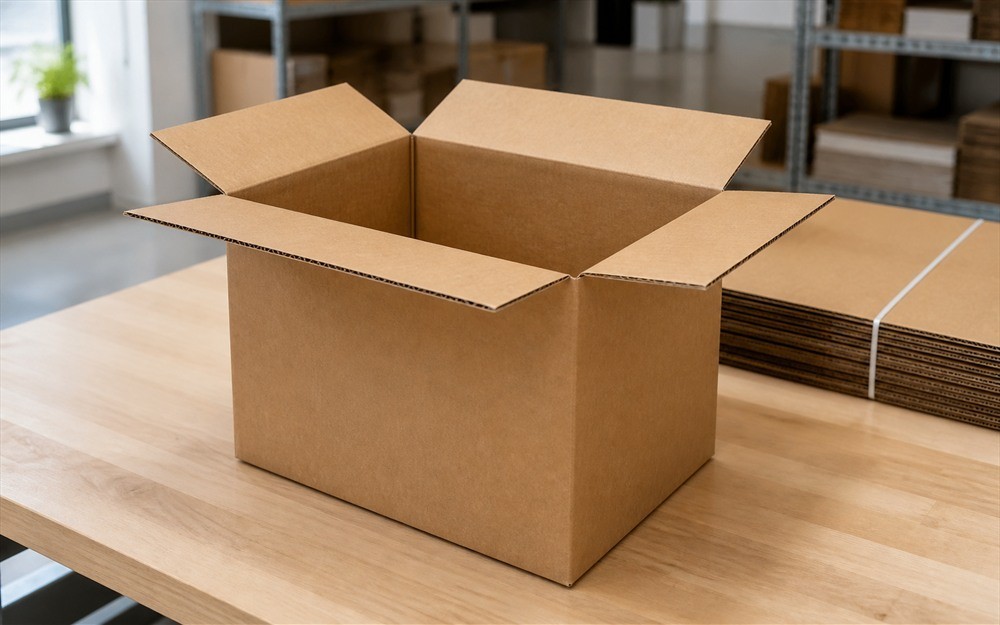
That's why a carton box made from corrugated board can hold heavy contents, survive stacking, and take knocks that would fold a cardboard box flat. The trapped air inside the flutes even cushions impacts and slows heat, which helps when a parcel sits in a hot van in Klang all afternoon.
Here's a one-line definition worth keeping: corrugated board is engineered paper, where geometry does the work instead of raw thickness.
Corrugated vs cardboard: which one for shipping?
For courier shipping, corrugated wins almost every time. Parcels in Malaysia get stacked, tossed, and squeezed through automated sorting. A single-sheet cardboard box has nothing inside it to absorb any of that.
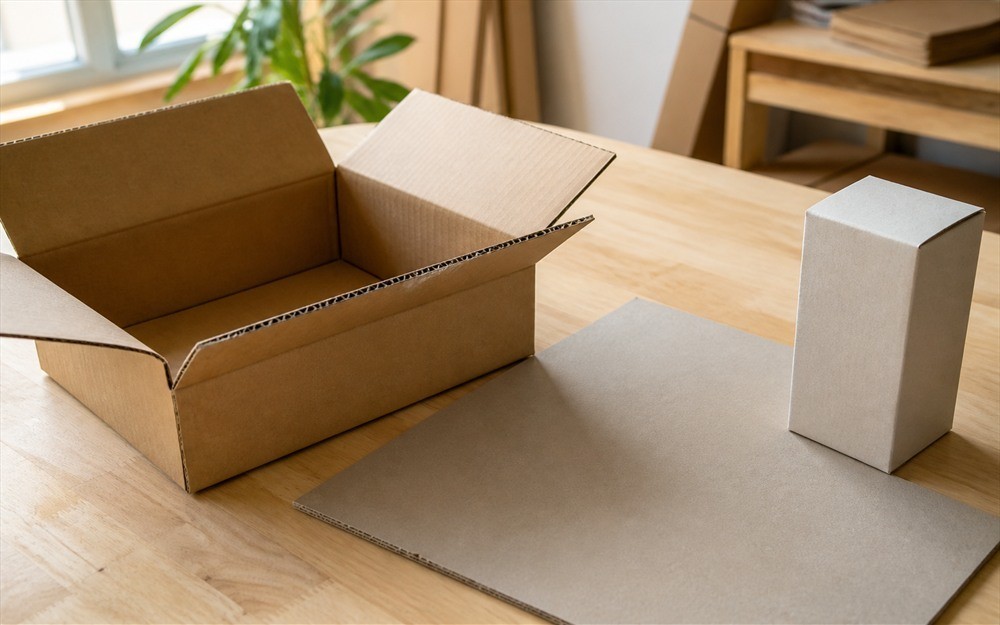
We see this mistake weekly. A seller packs products in pretty retail cardboard boxes, ships them bare, and the complaints roll in: crushed corners, dented lids, unhappy unboxing photos. The fix is simple. Keep the cardboard box for presentation, then ship it inside a proper corrugated carton, such as our small or medium carton boxes.
The reverse also applies. If your product never leaves a shelf or a shopping bag, corrugated is overkill and cardboard gives you a nicer print surface for less money.
How can you tell them apart in two seconds?
Look at the edge. Corrugated board shows a visible wavy line running through the cut edge, like a little row of waves between two skins. Cardboard shows one solid layer.
You can also do the pinch test. Pinch the board between two fingers. Corrugated has a springy give, then resistance. Cardboard just feels dense and flat.
And listen to a flick of the finger. Corrugated sounds slightly hollow because of the air in the flutes. Small tricks, but they save you from ordering the wrong material for a thousand boxes.
Does the difference affect cost?
Weight for weight, corrugated gives you far more strength per ringgit, because the fluted structure does the heavy lifting instead of extra paper. That's why nearly all shipping cartons, from a home seller in PJ to a factory in Shah Alam, are corrugated.
Corrugated also comes in grades. Different flute sizes change the balance between cushioning and stiffness, which we explain fully in our A flute vs B flute guide. Choosing the right grade matters more than choosing the thickest one, and our carton box size guide helps you match the box to the job.
Cardboard costs less for small display boxes and prints finer detail. Corrugated costs less per unit of protection. Different tools, different jobs.
So which one does your business need?
Ask one question: will this box travel alone through a courier network? If yes, corrugated. If it only needs to look good in hand or on a shelf, cardboard.
Many businesses need both, and that's normal. A gift brand might use a cardboard presentation box inside a corrugated shipper. A food seller might use printed cardboard sleeves and corrugated delivery cartons. What you want to avoid is asking one material to do the other's job.
Still unsure? Send us your product details through our contact page and we'll point you to the right box, no guessing needed.
Can you recycle both materials?
Yes, and this is one thing corrugated and cardboard share. Both are paper-based, both are widely collected by recyclers across Malaysia, and both are commonly made with a portion of recycled fibre in the first place.
A few habits improve their recycling value. Keep boxes dry, since soaked board is worth less to collectors. Flatten them to save space. Peel off plastic tape where you can, and skip heavy plastic lamination on printed designs if recyclability matters to your brand.
There's a practical bonus here for sellers. A plain kraft corrugated box with paper tape reads as environmentally sensible to customers without a single green slogan printed on it. The material quietly makes the claim for you, and it's a claim that happens to be true.
Frequently Asked Questions
Is corrugated board the same as cardboard?
No. Cardboard is a single solid sheet of thick paper, while corrugated board has a wavy fluted layer glued between flat liners. The flutes give corrugated board far more strength for shipping.
Which is better for courier parcels, corrugated or cardboard?
Corrugated, in nearly every case. Its fluted structure absorbs stacking pressure and impacts inside the courier network, which plain cardboard cannot do.
Why do people call corrugated boxes "cardboard boxes"?
It's just everyday habit. The brown shipping box most people picture is actually corrugated board, and suppliers use the proper term because the two materials perform very differently.
Can I ship products in a cardboard box?
You can, but only inside a corrugated outer carton. Cardboard alone crushes easily in transit, so use it for presentation and let a corrugated box handle the journey.
Last updated: July 2026 by the CartonBox.my team.